
Questions:
- I have an old vintage car like a Porsche, Mercedes, or Jaguar. How do I go about figuring out its age, condition, and potential value?
- How do I figure out which Porsche model I inherited?
- How do I identify a classic Mercedes model?
- Is my Jaguar an E-Type or XKE? How do I figure out which Jaguar I own?
- Where do I find the VIN number?
- How can I tell if my Porsche, Jaguar, or Mercedes is rare?
- Is an air-cooled Porsche valuable?
- What are the most collectible Porsche models?
- What are the most valuable classic Mercedes models?
- What Jaguars are considered collectible?
- What does “matching numbers” mean?
- How do I know if the car has its original engine?
- How do I decode a Porsche VIN?
- How Can I gell if my inherited car a special edition?
Answers:
I have an old vintage car like a Porsche, Mercedes, or Jaguar. How do I go about figuring out its age, condition, and potential value?
Many people inherit vehicles from Mom, Dad, Grandma or Grandpa. Often when a loved one dies, they leave classic vehicles in their estate. These are often Porsches, Mercedes, or Jaguars from years past – ranging from the 1960s to the 2010s. If you or your family have inherited a vehicle, the first order of business is to figure out the make / model / year. Figuring out the “Make” is often the easiest. Usually, the car will have an emblem or logo on the front or back that clearly identifies it as a Porsche, Mercedes, or Jaguar. Next, we recommend you do the obvious – look in the glovebox for documentation, or wherever the person kept their documents. If you can find the Title, you’re in very good shape. You can also look for the VIN (Vehicle Identification Number). If you have that, you can literally Google it and go to various VIN lookup sites. Among the good ones are VIN Data (https://www.vindata.com/classic) or 912 – http://www.912vin.com/. Another method – believe it or not – is to take a photograph on your phone and ask AI to identify the vehicle.
How do I figure out what model Porsche did I inherit?
As explained above, start with the VIN, engine lid badges, registration paperwork, and any service records you can find. Porsche models can look deceptively similar across decades, so having a knowledgeable Porsche specialist look at the car is often the fastest way to identify exactly what you have. And here’s the deal – you’ll probably end up talking with a specialist anyway, as the market for Porsches is “thin.” You have to find a willing buyer at a good price, and the car’s make / model / year / condition / location can complicate that. So reach out sooner rather than later to an expert in Classic Porsches.
How do I identify a classic Mercedes model?
Mercedes typically places model designations on the trunk lid or rear badging, but many older cars have had badges removed or changed over time. This is a problem with many classic vehicles. If it’s from the 1960s or 1970s, it may have undergone extensive work, and some parts may not be “original.” Be careful which parts you use, because you can even have a VIN on the vehicle that belongs to another vehicle! The VIN, data plate, and factory paperwork can help identify the exact model, and an experienced Mercedes buyer or collector can usually recognize key differences immediately.
Is my Jaguar an E-Type or XKE? How do I figure out which Jaguar I own?
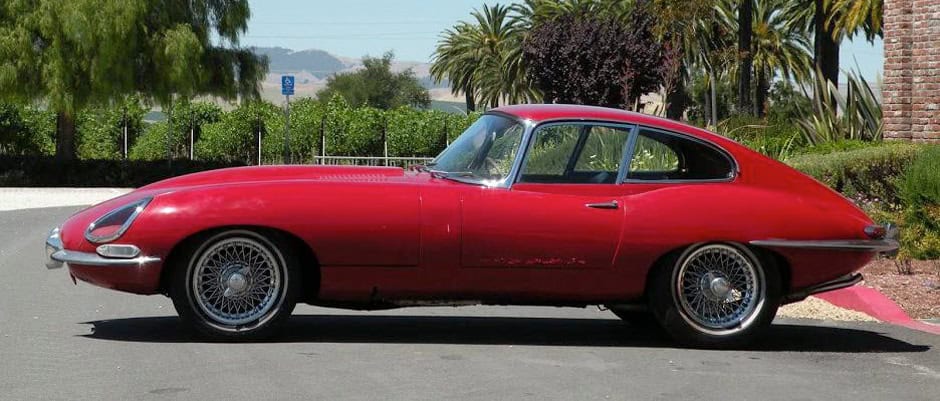 In the United States, “XKE” and “E-Type” are often used to describe the same vehicle, but Jaguar produced many variations over the years. In Europe the used the name “Jaguar E-Type” and here in America we used “Jaguar XKE,” but over time the two markets have blended together and so you hear both terms. Beyond that, the easiest way to identify the exact model of your Jag is by checking the VIN, body style, engine type, and production year, ideally with help from someone familiar with vintage Jaguars. If your Dad or Mom kept documentation, all the better. If you can find the Title, that’s good too. It can be a bit of a fishing expedition.
Where do I find the VIN number?
VIN locations vary by manufacturer and year, but common places include the dashboard near the windshield, the driver-side door jamb, the engine bay, or stamped directly onto the chassis. Older classic cars sometimes have multiple identification plates, and locating all of them can help confirm authenticity and value. You have to be careful, however. On older Jaguars from the 1960s, for example, there may not be a VIN number. Instead they often had a “Chassis” number. The primary location was a “data plate”, which is an aluminum tag riveted inside the engine compartment. VIN numbers really did not become fully standardized until 1981, with the 17-character format.
How can I tell if my Porsche, Jaguar, or Mercedes is rare and valuable?
Rarity depends on production numbers, engine configuration, options, condition, and originality—not just age. The “value” of the car, however, isn’t just a function of how rare it is. There is also market demand. And some vehicles are in much better shape than others. It is one of those proverbial “It depends” situations. You can try your best to “do it yourself,” but in the end you will need a professional to start making sense of it all. A professional appraisal or vehicle inspection from a specialist can help you not only determine the value (it will be a continuum) but also assess the market situation.
Is an air-cooled Porsche valuable?
Many air-cooled Porsches — especially older 911 models, from 1948 until 1998 — have become highly desirable among collectors. Any Porsche after 1999 will be water cooled, like most cars nowadays. Higher value vehicles might include – the early 911 “Longhoods”, the 930 Turbo, the 964 generation, and the 993. Of course if you own a Porsche 356, reach out to us immediately. Those are hard-to-find and very valuable! However, value varies dramatically based on year, condition, originality, mileage, and specific trim, so it is worth having the car evaluated before making assumptions.
What are the most collectible Porsche models?
Some of the most collectible Porsche models include the Porsche 356, early long-hood 911s, 930 Turbos, Carrera RS variants, and limited-production air-cooled models. Even non-running Porsches can be worth quite a bit, which is why professional evaluation is important before restoring or selling. We’re especially interested in the Porsche 917K, 956/952, and 550s. So incredibly hard to find, but if you have one, we want to see it! Porsche.com has a lot of cool photos of the older vehicles as at https://www.porsche.com/international/accessoriesandservice/classic/models/959/. Whether you have one of these vehicles or not is the primary question. Then you have to know more than that – the make / model / special options / originality of the parts, etc., and the market value. It’s not so easy to get the best price, especially if you are an amateur.
What are the most valuable classic Mercedes models?
Highly collectible Mercedes models often include the 300SL Gullwing, 280SL “Pagoda,” vintage AMG cars, and certain SL and SEC coupes from the 1960s through 1990s. Originality, service history, and condition can dramatically affect value in the collector market. Well, the 1955 Mercedes Benz 300 SLR Uhlenhaut Coupe went for $142.9 million. But more realistically we’re looking for classic Mercedes Benz from the 1950s – to the 1990s. Many of those are “reasonably” priced, which still can be quite a chunk of change.
What Jaguars are considered collectible?
The Jaguar E-Type is among the most collectible British sports cars ever built, but models like the XK120, XK140, XK150, and certain vintage sedans also attract collectors. Because restoration costs on Jaguars can be high, condition and completeness matter a great deal. Here again, the older cars have the greatest values, like a Jaguar D-Type or C-Type. Those come from the 1950s. The E-type (1963-1964) is often the sweet spot for “average” collectors (You still gotta be rich…). But whatever Jag you have or think you have, reach out to a professional Jaguar appraisal service to know the facts.
What does “matching numbers” mean?
“Matching numbers” generally means the car still retains its original engine, transmission, and major factory components as delivered when new. Collector cars with matching numbers are often more desirable and valuable because originality plays a major role in the classic car market. Having “Matching numbers” can increase the vehicle’s value by 20% to 100%. For cars from the 1950s or 1960s, of course, it’s hard to find such vehicles because time takes its toll. You want to look for the Chassis Number / VIN, which is often stamped on components such as the engine block, transmission/gearbox, body, and rear axle/differential.
How do I know if the car has its original engine?
You can compare the engine serial number against factory records, VIN documentation, or manufacturer databases to verify originality. Since these numbers can be difficult to interpret, many owners choose to have a Porsche, Mercedes, or Jaguar specialist confirm whether the drivetrain is original. Of course it’s not just the original engine itself that matters – it’s the “matching numbers” issue in its totality plus the car’s condition (and the extent to which it can be restored, and at what cost).
How do I decode a Porsche VIN?
Porsche VINs contain information about the model, year, production sequence, and manufacturing details. While online VIN decoders can provide basic information, older classic Porsches often require expert interpretation because early VIN systems were not always standardized.
How can I tell if my inherited car is a special edition?
Special editions often have unique VIN sequences, factory option codes, badges, colors, or limited-production features that are not obvious to casual owners. Because some rare versions can be worth substantially more than standard models, it is usually smart to have the vehicle inspected by an experienced collector car expert before selling. There are so many variables to identifying a vehicle (first), then its condition (second), then the market demand (third), and then the best way to position it to sell. Finding an expert team can be paramount as you figure out not just the vehicle’s potential value but its actual value.