
In 1948, Ferdinand “Ferry” Porsche started designing a sports car. By 1970, Porsche Motors was a sports car and racing legend. Classic Porsche cars command high prices today and for good reason. But with so many different models to choose from, finding the right one for your needs and your budget can be challenging. To help you make a decision, here’s a quick look at the different models available.
1948: Porsche 356/1
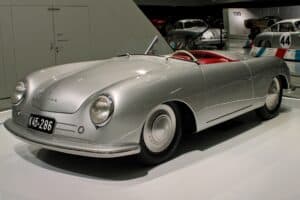
Porsche 356/1, Porsche Museum, Stuttgart. Photo by Alexander Miel (2009), Courtesy Wikimedia Creative Commons
Ferry Porsche had automobile design in his blood. His father worked for Daimler-Benz and created the Volkswagen Beetle. But Ferry wanted a sportier, high-performance vehicle. After many sketches, he decided on #356.
The 1948 Porsche 356/1 prototype drew heavily on Volkswagen technology. The suspension, engine, and other parts were modified from a Beetle. But nobody would mistake the 356/1’s sleek aluminum body for a Volkswagen. And thanks to higher cylinder head compression and larger valves, the 356/1 engine could generate 40hp to the Beetle’s 25, giving it top speeds of up to 84 mph.
1949-65: Porsche 356
Over its 17-year production life, the 356 underwent four distinct generational phases. From its humble beginnings in a small Austrian town, the Porsche 356 became a worldwide sensation. Each generation of the 356 has ardent fans who prefer their vehicle to all earlier or later models.
The Porsche 356 models came in several body styles:
- Coupe: The most common, a fully enclosed hardtop model
- Cabriolet: A luxury soft top convertible with roll-up windows and a fixed windshield frame.
- Speedster: (Early 356A) A minimalist, low-cost, sporty convertible with a low, removable windshield, side curtains, and bucket seats.
- Convertible D: Replaced the Speedster (late 356A), with roll-up windows and a fixed windshield frame.
- Roadster: (356B) The high-end open-top for the 356B (T5), with a more substantial top and features than the Convertible D
1948-54: Porsche 356 “pre-A”
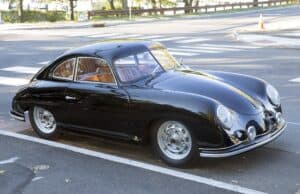
1952 Porsche 356 1500 Super. Photo by Mr. Choppers. Courtesy Wikimedia Commons
Through 1948 and 1949 Ferry and employer/designer Erwin Komoda produced fifty 356 Porsches. These vehicles looked very much like the 356/1, with one important distinction: the mid-engine placement was moved to the rear. This gave the new 356s better traction and allowed for a small back seat.
In 1950 Porsche moved its operations to a facility in Zuffenhausen, Germany. Post-1950 Porsche 356s had steel bodies rather than the aluminum used in the 1948 and 1949 models. That year, Max Hoffman imported the first Porsche 356es into North America.
The mid-1951 Porsche 356 replaced the previous split windscreen with a bent screen. New 1,300cc and 1,500cc engines increased the Porsche 356’s horsepower to 60hp and 70hp respectively.
In late 1954, Max Hoffman requested a stripped-down Porsche for the American market. Following the lead of British sports cars like MG and Triumph, Porsche’s 356 Speedster offered a removable windshield, manual rain top, and slot-in windows.
1955-59: Porsche 356A
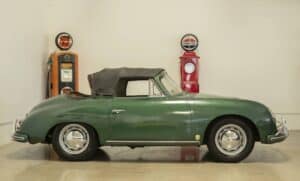
1958 Porsche 356A Cabriolet. Sold by Dusty Cars
The 356A offered a smoother, more refined suspension than earlier models. Curved windshields replaced the bent screens. But the biggest change was to the engines. The new 1.6L engine offered 75hp. In 1956, Porsche also offered an option for the four-cam “Carrera” engine used in Porsche race cars. This 1.5l engine offered 110 hp. In 1959, a 1.6l model provided up to 145hp. While the Carrera engines were certainly powerful, they were also notoriously difficult to maintain and repair.
In the US, 1,200 356s were sold as “Porsche Continentals” in 1955. After a lawsuit from Lincoln, which owned the “Continental” trademark, the remaining 152 were rebadged as “Porsche Europeans.” Hoffman returned to the “356A” designation in subsequent years, so 1955 Porsche Continentals or Porsche Europeans are highly sought after.
The 1957-1959 Porsche 356As used teardrop taillights for a sleeker look and better visibility. They also had a stronger transaxle and a new steering box that refined the car’s feel. 1959 saw the end of the Porsche 356A Speedster and the dawn of the new Porsche 356A Convertible D.
1959-63: Porsche 356B
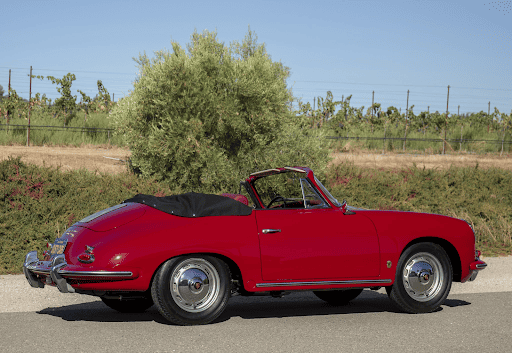
Fully restored 1960 Porsche 356B Super 90 Cabriolet. Contact us for price and availability
As Porsche’s global footprint increased, Porsche designers had to keep up with international safety standards. The headlights and bumpers on the 356B were 10cm (4 in) higher to provide better protection and visibility. This higher front profile is a sure way to distinguish between a 356A and 356B.
Late 1961-1963 Porsche 356B models have twin vertical grilles on the rear cover instead of the single grille found on 365A and earlier 365Bs. Finned aluminum brake drums helped improve heat dissipation and braking performance.
The 1960-63 Porsche 356B Coupes also got an interior refresh. Fitted quarter lights on the front windows dramatically improved ventilation. Deeper front seats provided better comfort on long drives.
The 356B’s 1600 Super 90 engine still wins accolades from Porsche fans. While its 90hp rating was lower than the Carrera engine, the 1600 Super 90 was much easier to maintain and less sensitive to temperature. 365Bs with Super 90 engines also came with a front stabilizer that improved steering and counterbalanced the rear engine’s tendency to oversteer.
1964-65: Porsche 356C
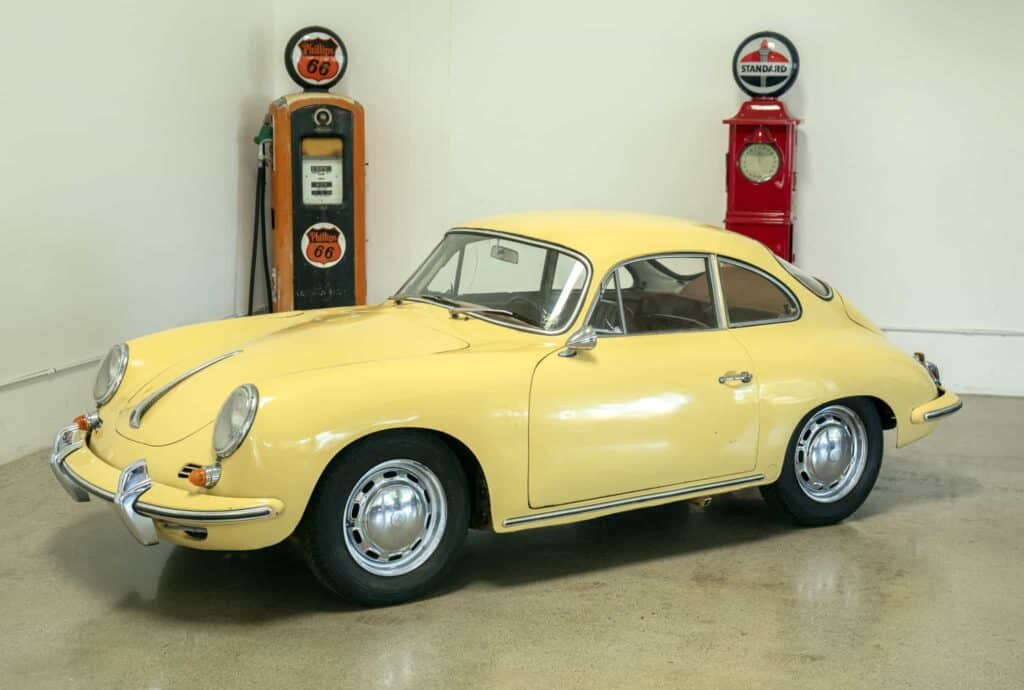
1964 Porsche 356C Coupe. Sold by Dusty Cars
Many Porsche fans consider the 1964-1965 Porsche 356C to be the best choice for first-time classic Porsche drivers. Porsche introduced all-wheel disc brakes on 356Bs with the Carrera engine; all 356Cs use disc brakes. This improved stopping power and brake control dramatically.
In addition to the 1600C (1.6l/75hp) engine, 356C buyers could opt for the 95hp 1600 SC. The SC improved upon the Porsche 356B’s Super 90 engine with reworked intake and exhaust valves, superior compression, and high-lift camshafts.
Porsche 356C engineers revised the suspension geometry to optimize handling. This final version also utilized the 356B T6 body shell, which featured the external fuel filler on the front fender and a larger rear window for improved visibility.
The Porsche 356C is the pinnacle of Porsche’s 356 model. But once you reach the pinnacle, there’s no place further to climb. Within a few months after releasing the 356C, Porsche premiered a new model that would become emblematic of the brand.
1963-Present: Porsche 911
At the 1963 Frankfurt Motor Show, Porsche premiered its new 901 car. While most attendees were greatly impressed by the 901’s sophisticated engineering and performance, Peugeot was unamused. Their French patent covered every three-number car name that had a “0” in the middle. Rather than changing the name for the French market, Porsche decided to rechristen their new vehicle the Porsche 911.
The Porsche 911 was larger, more comfortable, and significantly more powerful than the 356 line. Its air-cooled 2.0-liter flat-six boxer engine gave it a top speed of approximately 130 mph, but also led to a tendency for oversteer when driven hard. Still, the sleek Porsche 911 came out of the gate like gangbusters and continues to be an icon of sleek elegance and brute power. 1963-1970 Porsche 911s come in two body styles:
- Coupe: The standard fixed-roof version.
- Targa: A removable roof panel with a stainless-steel roll hoop.
1964-73: Porsche 911 F-Series
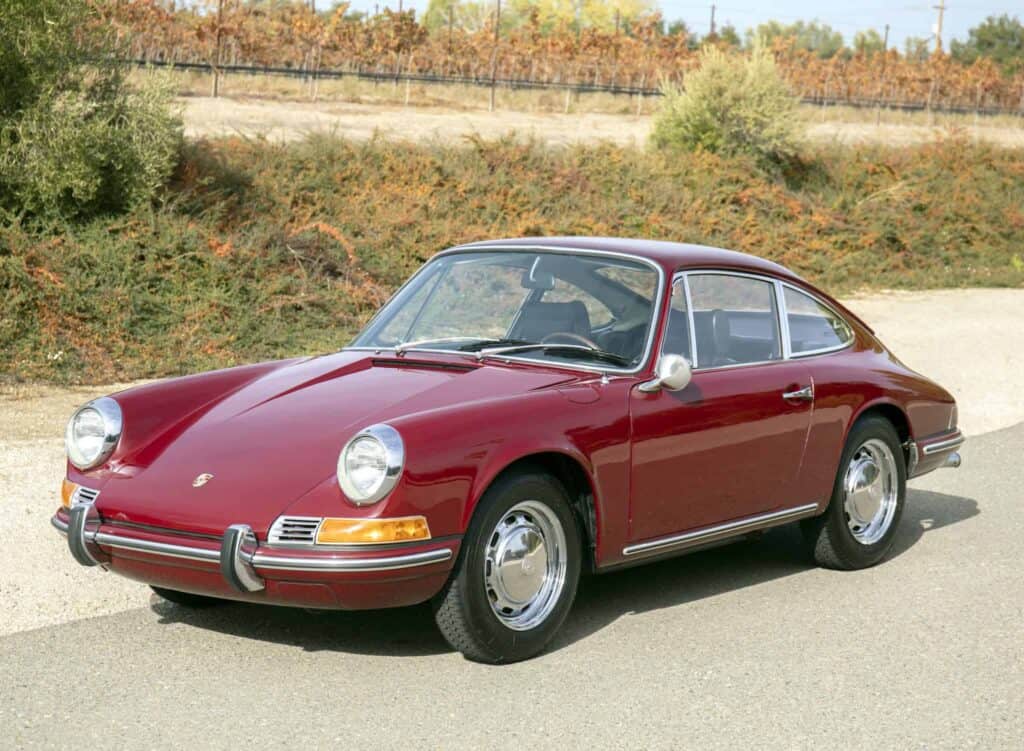
1968 Porsche 911 Coupe. Sold by Dusty Cars
Porsche 911s made between 1964-68 had an 87-inch (2.211m) wheelbase. Because of the rear-engine placement, these SWB (short wheelbase) designs were prone to lift-off oversteer. Drivers who weren’t used to the Porsche 911 often complained that the cars were challenging to handle around corners. 1969-73 Porsche 911s had an 89.3-inch (2.268m) base. The extra length made LWB (long wheelbase) Porsches easier and safer to drive for average consumers.
By 1969, Porsche had standardized the model lineup into three distinct trim levels: T (Touring), the entry-level model; E (Einspritzung), the comfort model featuring fuel injection; and S (Super), the high-performance model. 1967-1969 Porsche 911s offered a 911 S high-performance variant that provided 160 hp. In 1970 Porsche added a larger and more powerful 2.2-liter fuel-injected engines. 1972-1973 Porsche 911 S cars used a 2.4-liter fuel-injected engine with 190 hp.
The apex of the Porsche F-series was the 1973 Porsche 911 Carrera RS 2.7. This lightweight but powerful beast relied on a 210 hp engine and introduced the famous Ducktail rear spoiler. While the RS 2.7 was built for the racing track, the Ducktail became a standard feature on later Porsche 911s. The spoiler reduces aerodynamic lift and helps in cornering.
1965-1969: Porsche 912
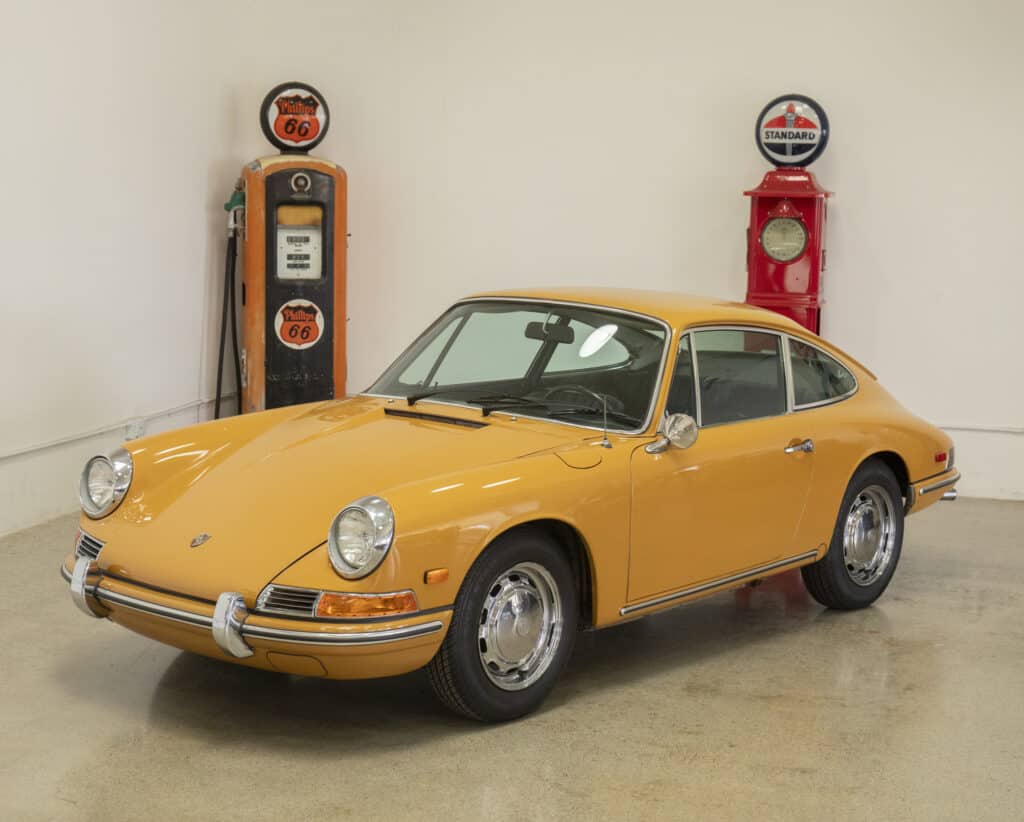
1968 Porsche 912 Coupe. Contact Us for Price and Availability
The Porsche 911 was significantly more expensive than the 356C. To provide budget-conscious buyers with an alternative, the Porsche 912 gave buyers the 911 body with the time-tested 1.6-liter four-cylinder engine used in the 356SC. Its 95hp wasn’t as powerful as the 911’s engine, but many drivers found the 912 easier to handle. This was especially true for 1969 Porsche 912s with the LWB body.
Modern bean-counters might worry that the 912 was cannibalizing 911 buyers. But the 912 introduced many first-time Porsche buyers to the luxury brand and turned them into lifetime Porsche customers. From their 1966 US introduction through 1969, the 912 outsold 911s in America by a 2-1 margin. The 912 was available in both the Coupé body and the new semi-convertible Targa style, which featured a fixed roll bar.
The 912 made a brief reappearance for the US market with the 1976 912E. Built as an entry-level replacement for the Porsche 914, it used a 2.0-liter four-cylinder Volkswagen engine with a Bosch L-Jetronic fuel injection system.
1969-76: Porsche 914
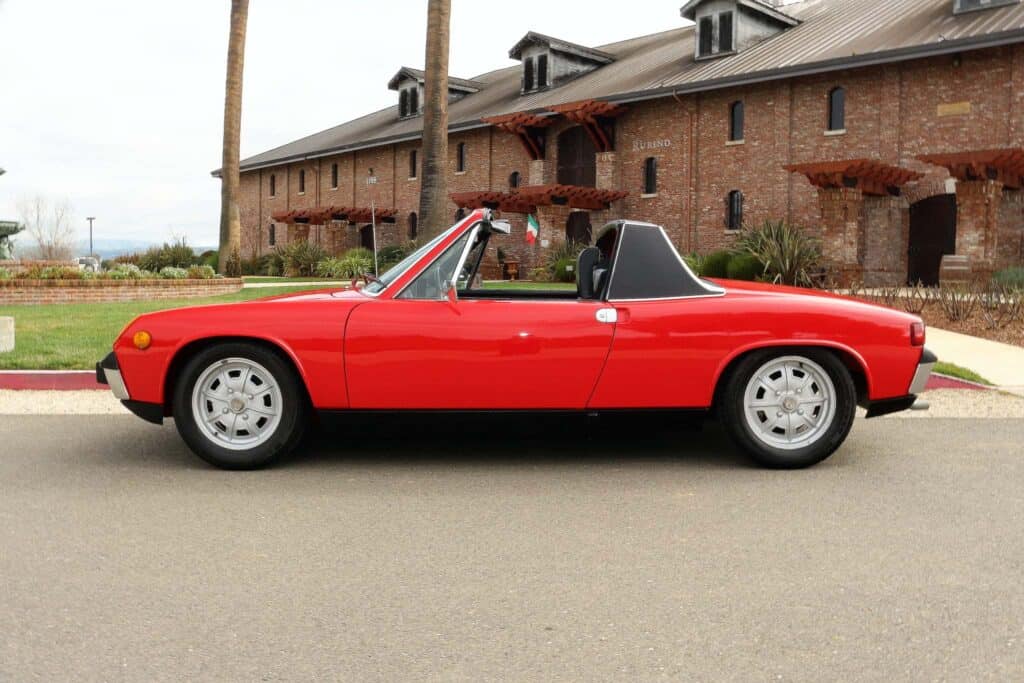
1973 Porsche 914 Targa. Sold by Dusty Cars
In 1969, Porsche needed an entry-level replacement for its Porsche 912. In a joint venture with Volkswagen, they created the Porsche 914, also sold in Europe as the VW-Porsche 914. The 914 used a rear mid-engine layout, with the engine placed between the driver and rear axle. This provided excellent weight distribution and precise, balanced handling on the most twisty roads.
The 1969-1971 Porsche 914 gave buyers a choice between a 4-cylinder Volkswagen engine (914/4) and a six-cylinder Porsche engine (914/6). The 914/6 was considerably more expensive than the 914/4 and sales were slow, so it was discontinued after 1971. Because only 3,322 Porsche 914/6s were sold, they are highly valued today by car collectors.
The 1973 Porsche 914 replaces the chrome bumpers found on earlier 914 models with black painted bumpers. 1974-76 Porsche 914s have large black square safety bumpers. While these were mandated by US safety standards, many Porsche fans find that they detract from the 914s sleek style.